What is a Minimum Viable Product for AI Startups: An Analytical Guide
MVP
2 mins
Nov 19, 2025

Khyati Mehra
Building AI MVPs: A Practical Guide for Founders
Imagine sitting across from a seasoned AI expert at your favorite coffee shop, steaming cup in hand, discussing how Minimum Viable Products (MVPs) can transform your AI startup vision into reality. That's the conversation we're having here. Let's explore why MVPs are crucial in the AI era and how you can navigate this journey effectively.
Why MVPs Matter in Today's AI Landscape
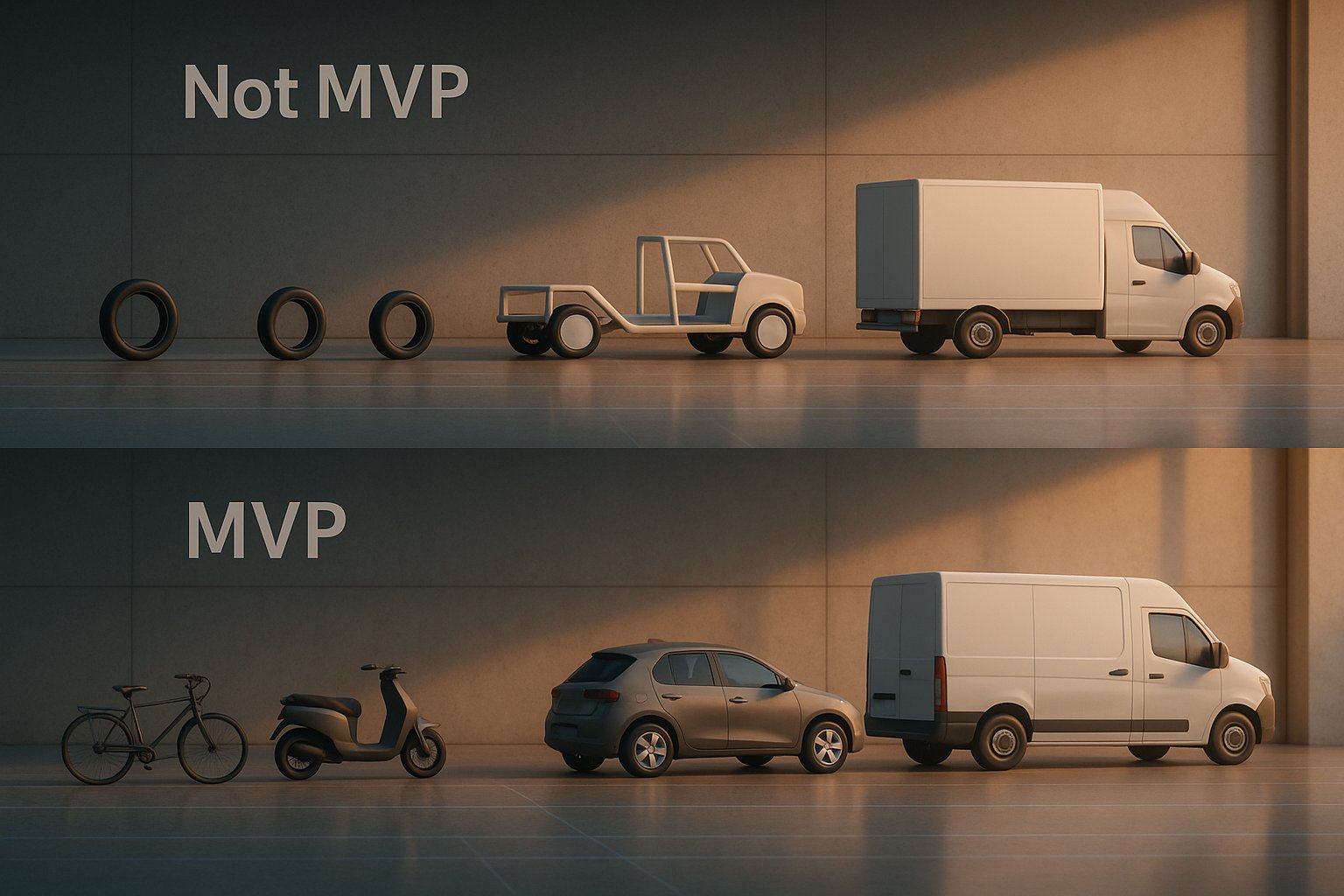
In the fast-paced world of AI, an MVP isn't just a stripped-down version of your ultimate product. It's a powerful strategy to validate your core business idea in real-time, ensuring you spend your resources wisely. The goal? To learn what works in the market without burning through your budget. This is especially vital when dealing with the complexities and costs of AI development.
Defining the MVP for AI
Creating an MVP is a strategic move, particularly in AI, where the stakes are high. The challenge lies in the high costs and intricate processes of developing and deploying AI models. Your MVP is a test to see if your AI solution solves a significant problem that customers are willing to pay for. It's about learning quickly and efficiently, not building every feature right away.
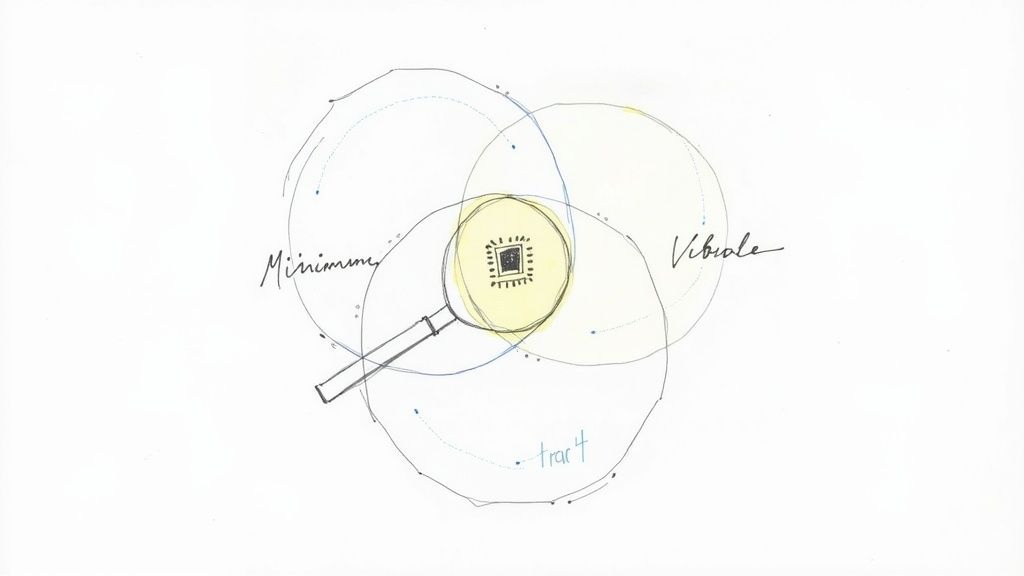
Key Components of an MVP:
Minimum: Focus on the essentials needed to test your core idea.
Viable: Ensure the product performs well enough to provide real insights.
Product: It must be a tangible solution that users can engage with to gather meaningful feedback.
This approach contrasts sharply with traditional development, where lengthy cycles often delay critical learning.
MVP vs. Traditional Development
Here's a quick comparison of the MVP approach with traditional development:
Attribute | MVP Approach | Traditional Development |
|---|---|---|
Primary Goal | Learning and validation | Deliver a full-feature product |
Development Cycle | Short, iterative sprints | Long, linear phases |
Risk Profile | Low, designed to fail fast | High, with significant upfront costs |
Customer Feedback | Early and continuous | Post-launch, often too late |
Scope | Narrow, focused on hypothesis | Broad, often leads to scope creep |
Flexibility | High, data-driven pivots | Low, costly changes |
Time to Market | Rapid, learning-focused | Slow, extensive planning |
MVPs are about agility and risk management, unlike the conventional high-risk model of building a complete product from the get-go.
The Four MVP Archetypes
Choosing the right MVP type can significantly impact your AI startup's success. Here are four archetypes to consider:
Wizard of Oz MVP: Simulates a full AI system with manual processes happening behind the scenes. Ideal for testing complex services.
Concierge MVP: Offers a high-touch service where users know humans are doing the work. Great for understanding complex B2B problems.
Single-Feature MVP: Focuses on one core function, allowing you to test market demand efficiently.
AI Prototype: Demonstrates technical feasibility to investors. This is about showcasing potential to secure funding.
The 6-Phase Launch Roadmap
Launching an AI MVP involves strategic steps to minimize risks and maximize learning:
Identify the Core Problem: Define a clear hypothesis that your MVP will test.
Set Success Metrics: Establish what success looks like in measurable terms.
Choose the Right Tech and Archetype: Align your tech stack and MVP type with your goals.
Develop the Core Features: Focus only on what's essential for testing your hypothesis.
Launch to a Targeted Group: Start with a small group of early adopters for high-quality feedback.
Create a Feedback Loop: Use user insights to guide continuous improvement.

Real-World Success Stories
Amazon's MVP: Initially, Amazon started as a straightforward online bookstore to evaluate the concept of e-commerce. By focusing on books, Jeff Bezos gathered essential data on consumer trust and logistics, which laid the foundation for Amazon's substantial growth.
Perplexity AI: This startup launched a single-feature MVP that provided synthesized answers along with sources, examining users' preference for concise information over traditional search results. Their focused approach attracted a dedicated audience and investor interest.
Dropbox's Early Approach: Dropbox began with a simple video demonstration of its concept, effectively communicating its value to potential users. This early strategy not only confirmed market interest but also helped the company obtain funding for further development.
Airbnb's Beginnings: Airbnb started by renting out air mattresses in a living room to test the concept of short-term rentals. This initial step allowed the founders to understand market demand and refine their offering, leading to the platform's long-term success.
Twitter's Launch: Twitter was initially developed as an internal messaging system for a podcasting company. When it was shared publicly, users quickly adopted it as a microblogging platform, validating its potential and guiding future developments.
Instagram's Initial Offering: Instagram began as a location-based check-in app called Burbn. Observing users' preference for the photo-sharing feature, the creators shifted focus to this aspect, resulting in the popular photo-sharing platform it is today.
Spotify's Rollout: Spotify first launched as an invite-only service in Sweden, focusing on minimizing piracy by offering a legal, user-friendly music streaming experience. Receiving positive feedback, it expanded to other markets, becoming a leading music platform.
Balancing "Minimum" and "Viable"
A common pitfall is focusing too much on "minimum" at the expense of "viable." Your MVP should function well enough to provide clear, actionable data. If it’s too basic, you risk misleading results that could derail your project.
Call to Action
Ready to build an MVP that captures investor attention? At Magic, we leverage over five years of experience with no-code platforms and AI implementation to guide you through the process. Our partnerships with VCs like 3one4capital and Avataar Ventures ensure we align your MVP development with strategic funding opportunities.
Schedule your free AI MVP consultation today. Download our exclusive AI MVP Canvas resource guide to get started. Let’s turn your AI vision into a reality that resonates with users and investors alike.